Over the past year, I’ve worked to combine science and marine life with art. As I develop my style, I’ve learned that I love exploring creative ways to share knowledge of marine life through engaging art. Whether it be more realistic illustrations, conceptual figures, or random fun pieces, I’ve enjoyed learning the practice.
Follow my art Instagram page here ->
Scientific illustrations
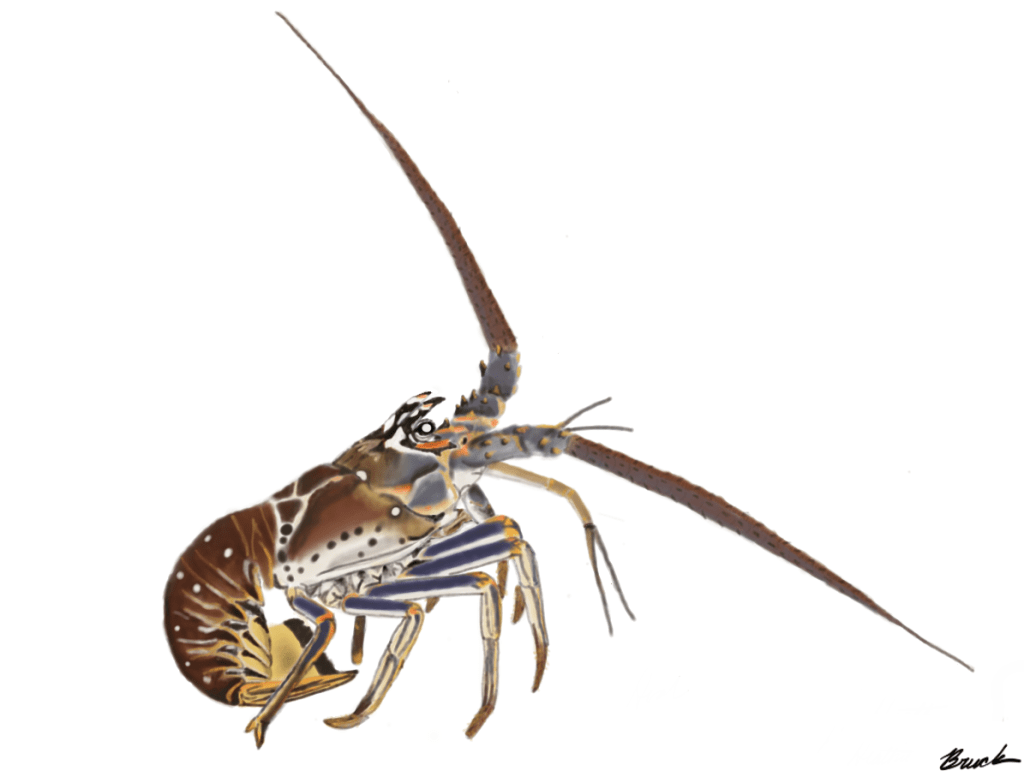
Caribbean spiny lobster (Panulirus argus). Featured in NOAA Hollings Scholar Blog .

Black dogfish (Centroscyllium fabricii).

Vampire squid (Vampyroteuthis infernalis).
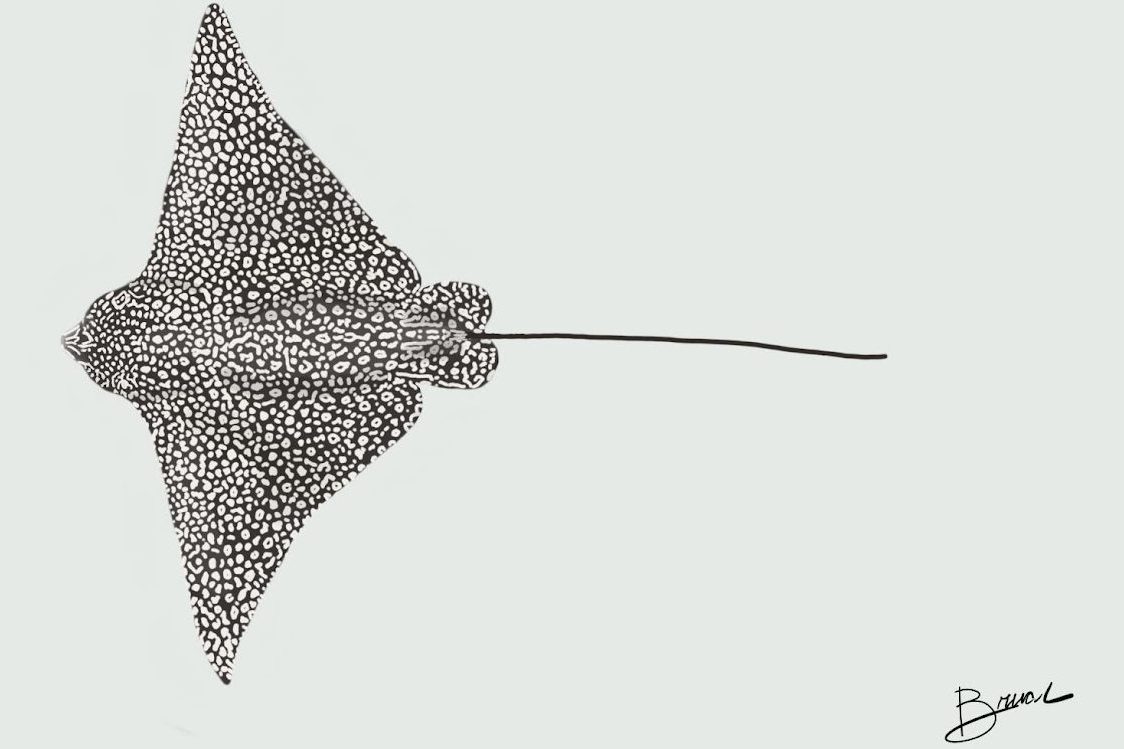
Spotted eagle ray (Aetobatus narinari).

Atlantic hagfish (Myxine glutinosa).

West Indian manatee (Trichechus manatus).
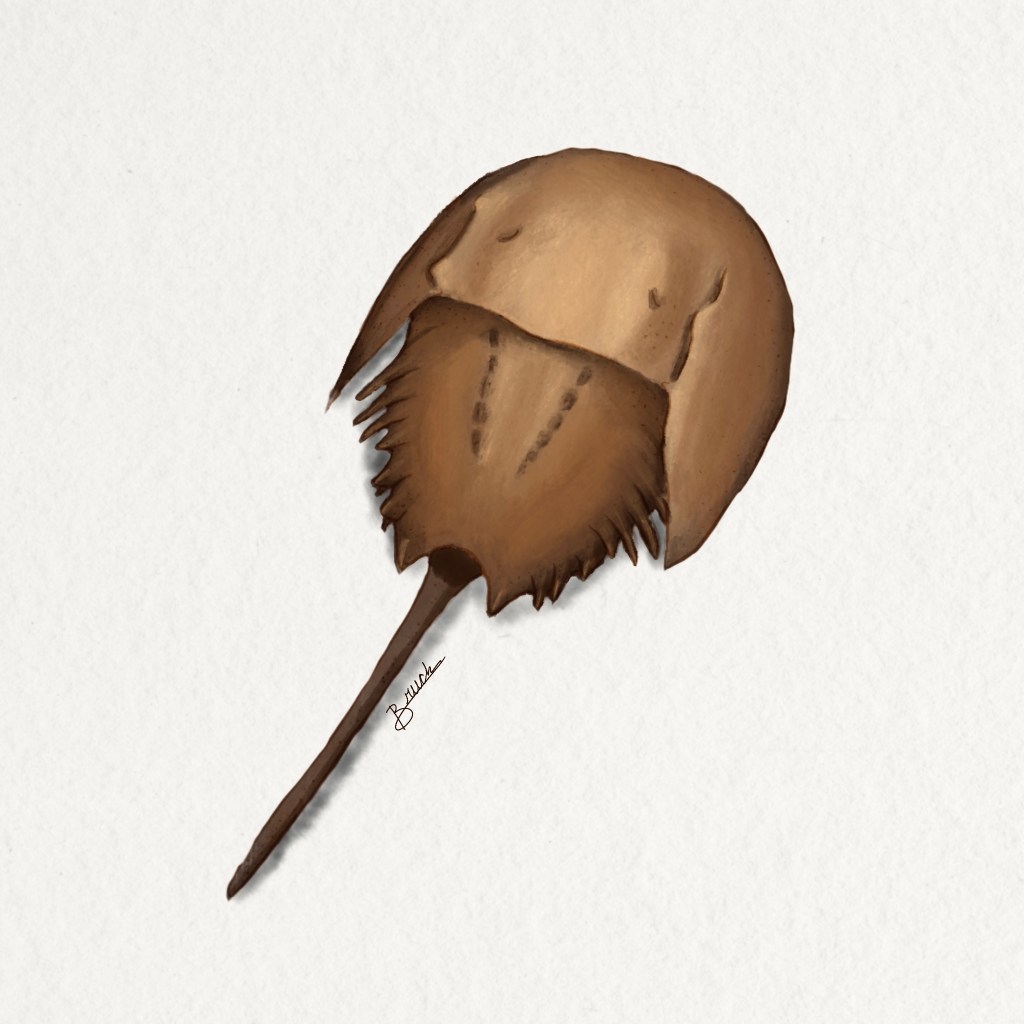
Atlantic horseshoe crab (Limulus polyphemus).
Figures
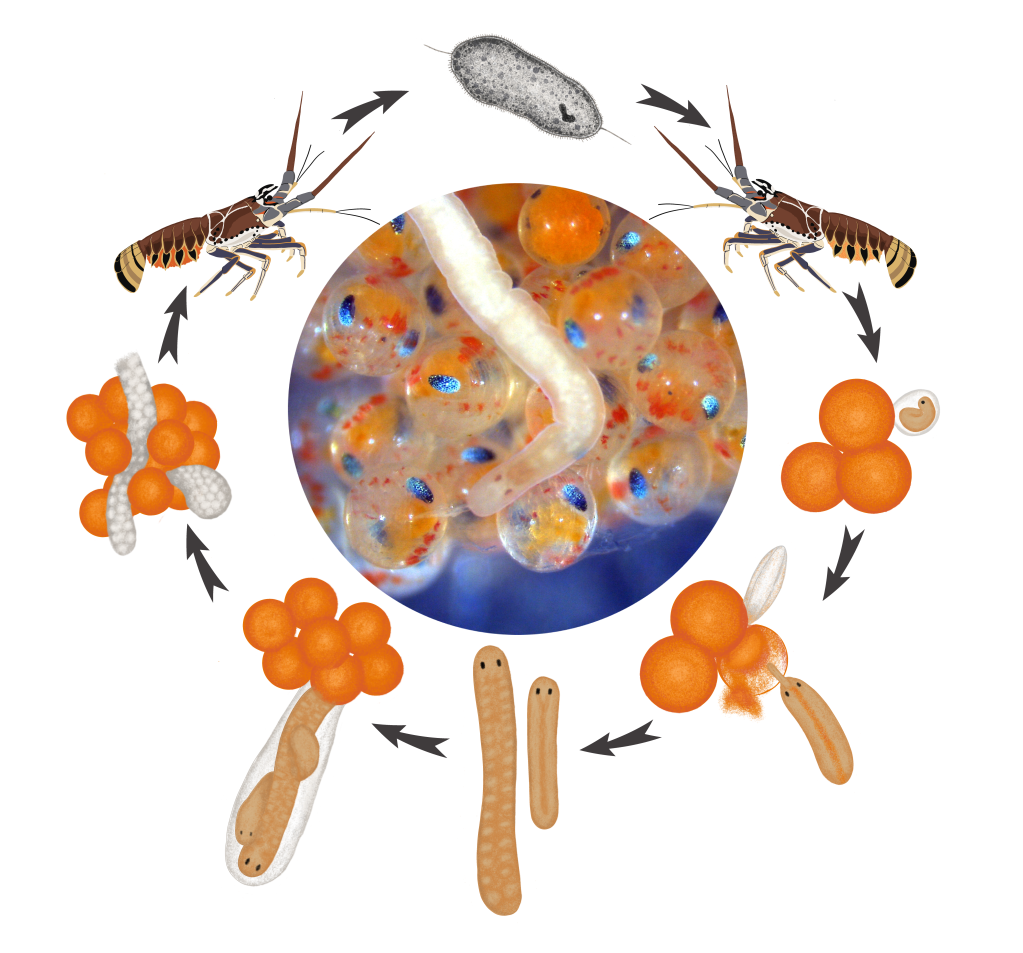
Life cycle of Carcinonemertes conanobrieni, a nemertean egg predator of the Caribbean spiny lobster.
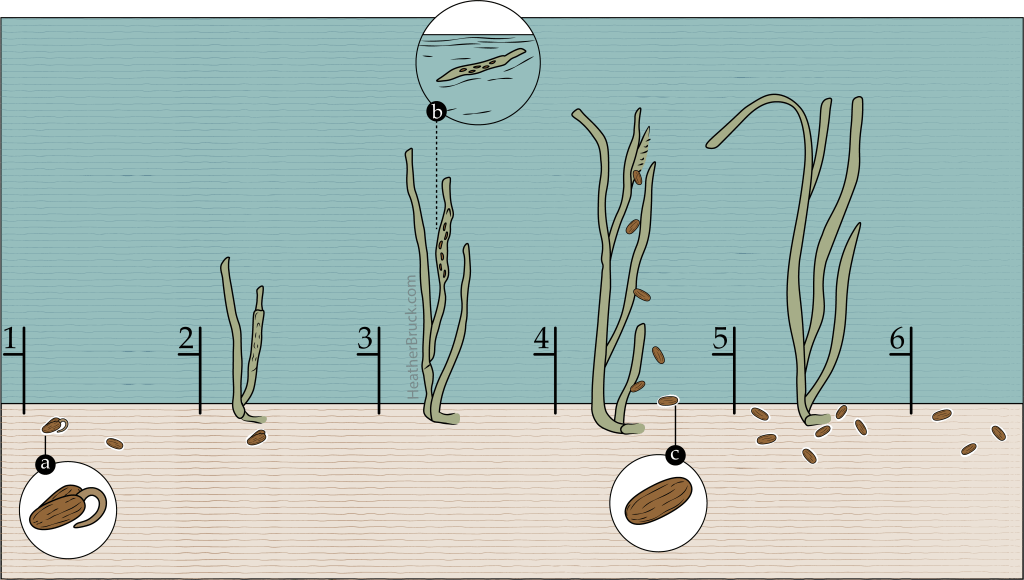
Sexual reproduction of eelgrass (Zostera marina). In North Carolina, seeds begin germinating in November/December and sprout (a) over the winter (1). By March, there is established and growing eelgrass (2), which can develop mature reproductive shoots. Seeds mature and are visible as dark spots in flowering shoots by May to June (3). Reproductive shoots broken off from the roots can float long distances, aiding in the global distribution of Zostera (b). In late May to June, mature seeds are released into the water (4) and many sink to the seafloor. They become integrated into the sediment and become part of the “seed bank” (5). They can lay dormant among the seed bank for months or years (6), but in North Carolina most viable seeds last 15 months at most within the bank.
Fun art

Starfish mishap.
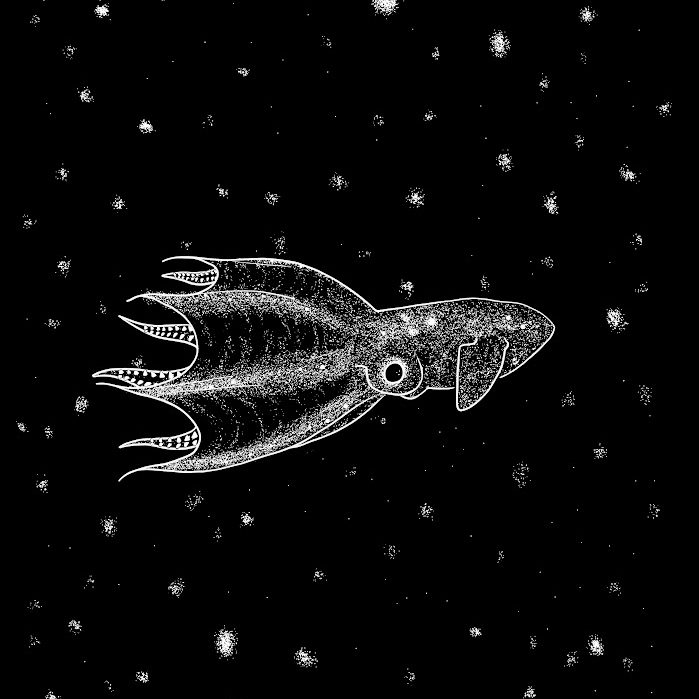
Vampire squid in the deep.
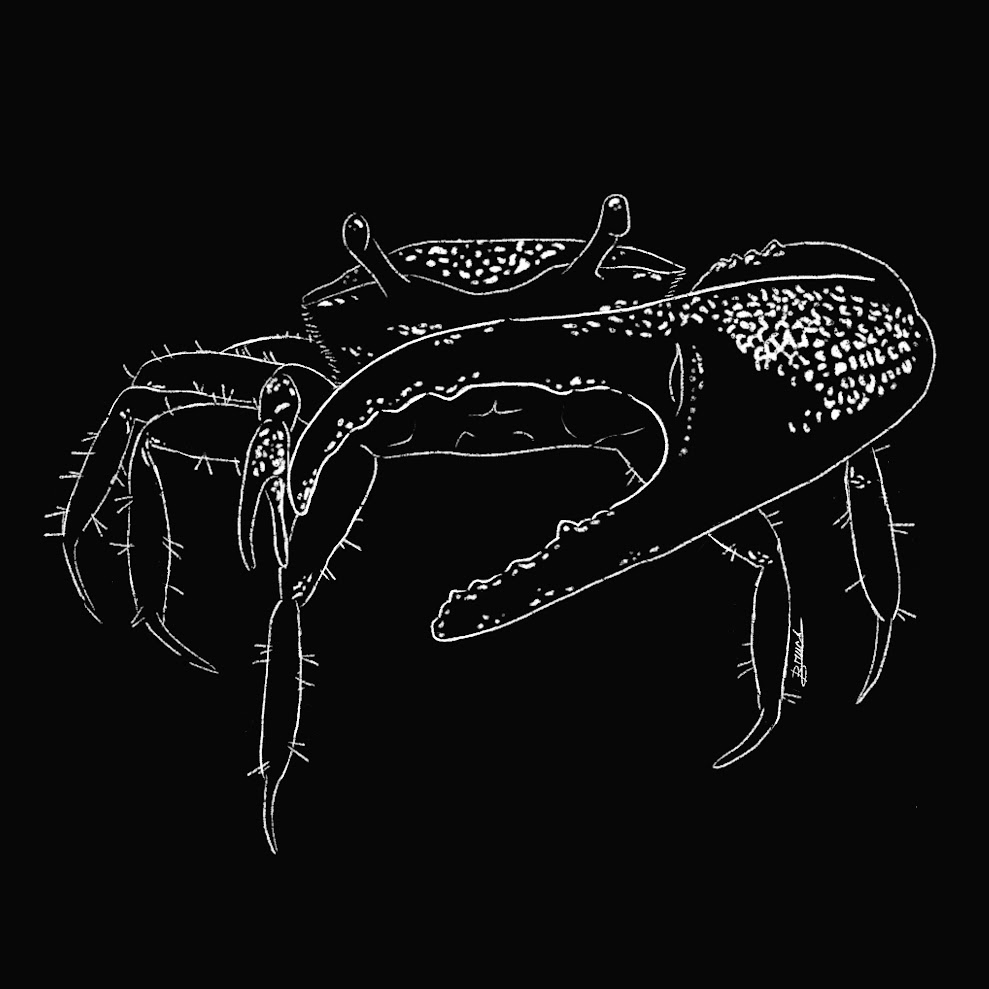
Male fiddler crab.
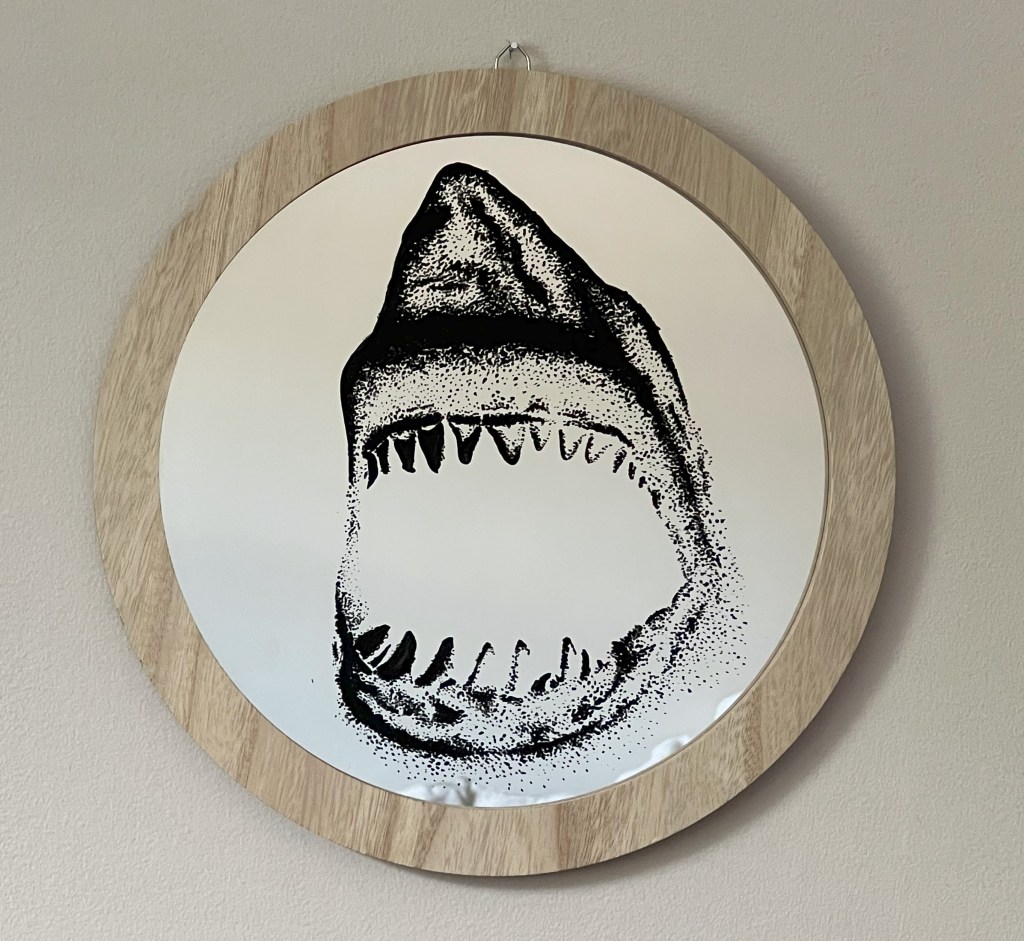
Spooky shark (acrylic on mirror).
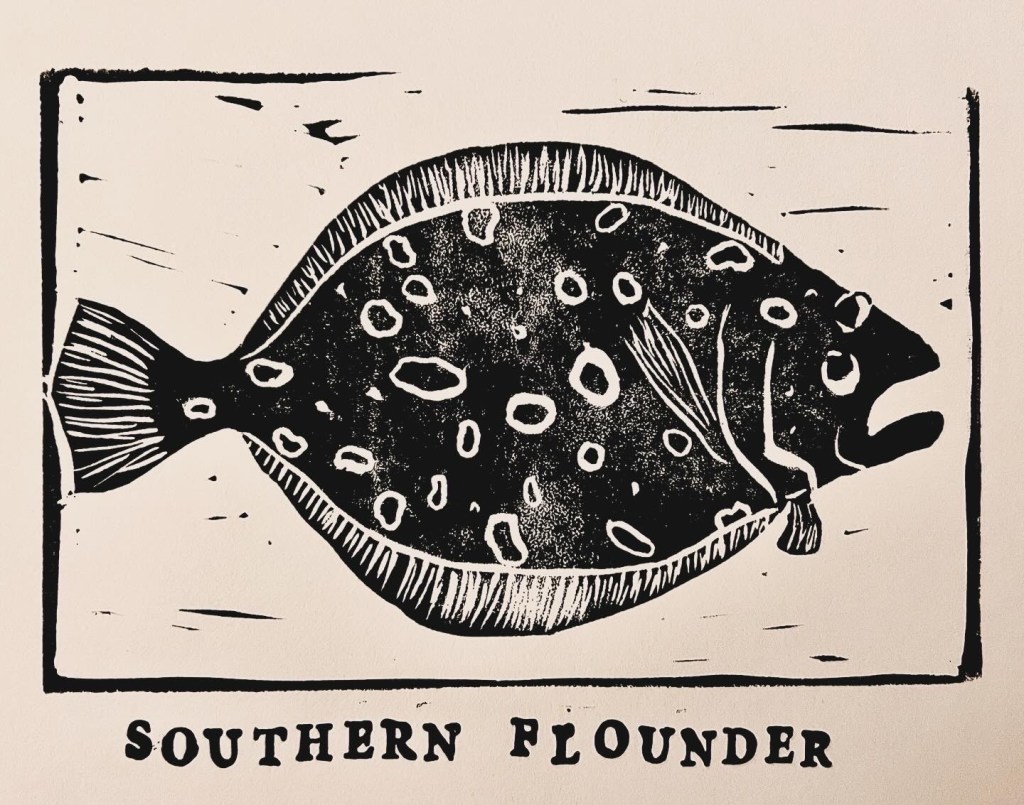
Southern Flounder (linocut).

Sawfish at work (linocut).

Coastal cowboy (linocut).
Photography
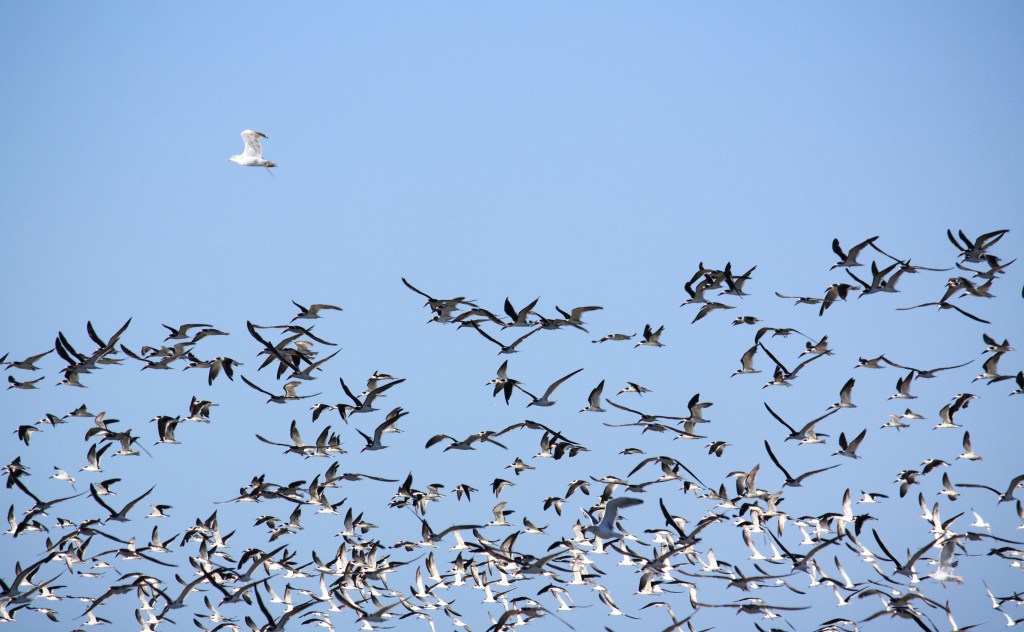
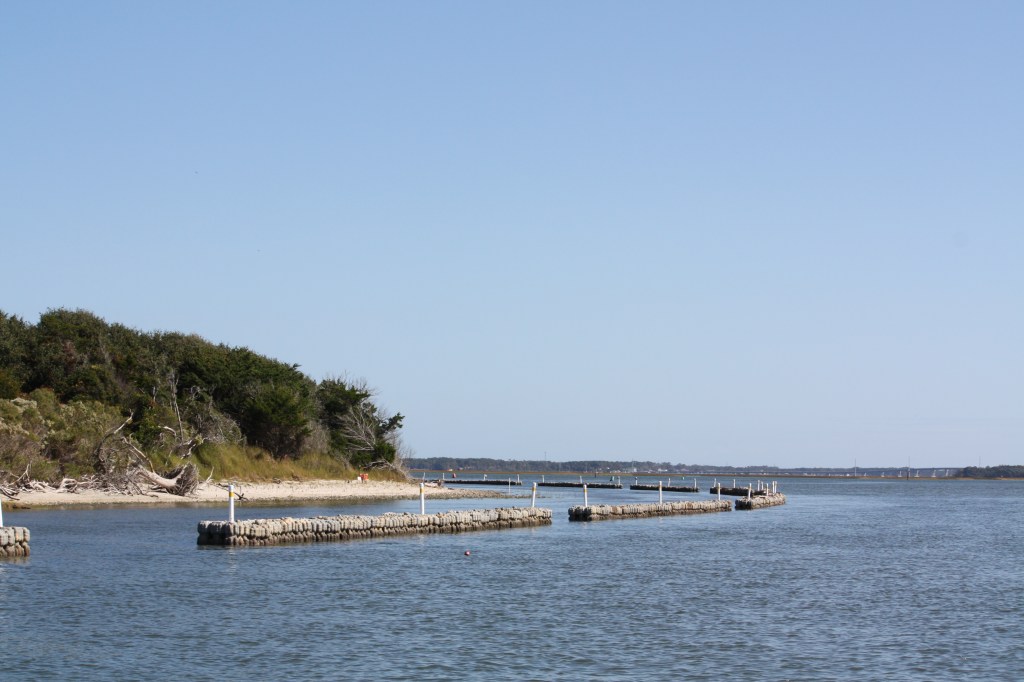
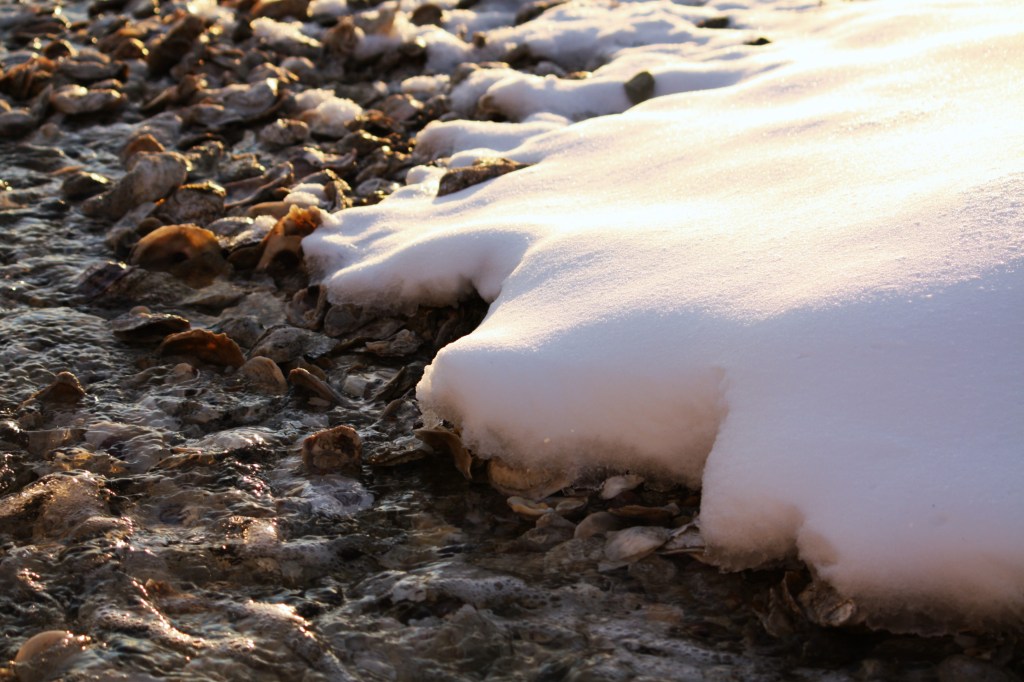
North Carolina




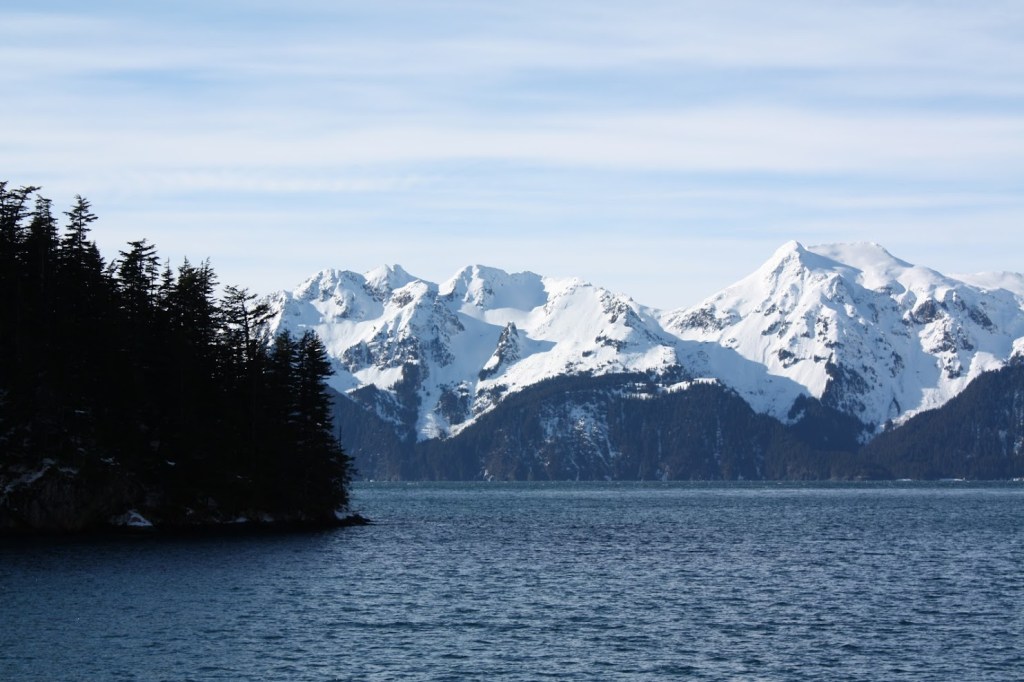
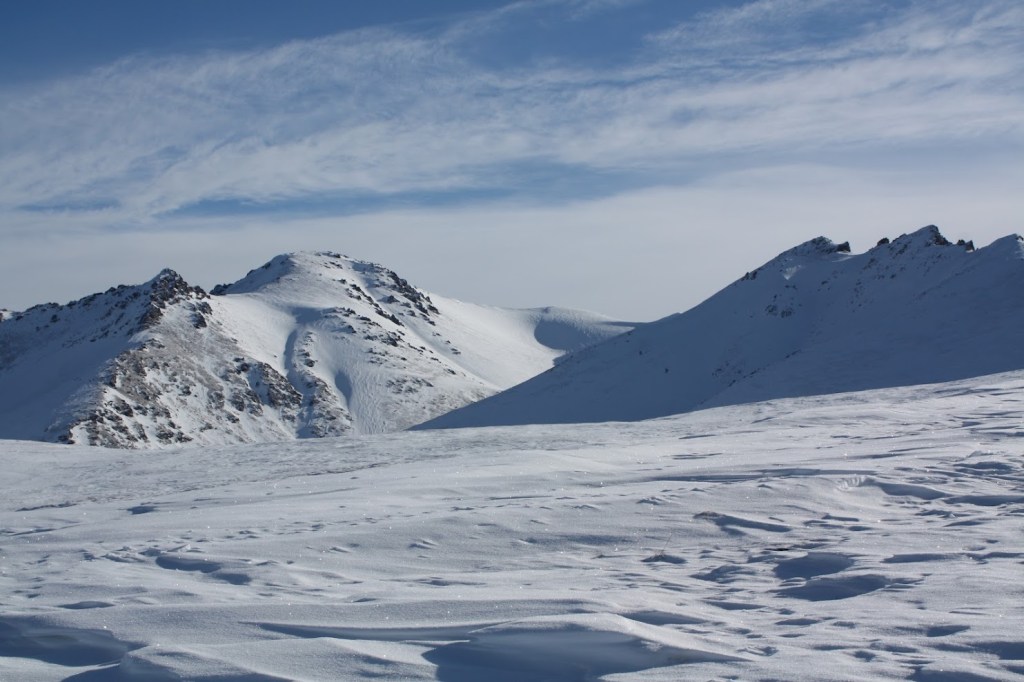
Alaska


 Heather Bruck